What Causes Soot From a Fireplace
Understand what causes soot from a fireplace, including incomplete combustion, poor ventilation, wet firewood, restricted airflow, and chimney draft problems.




Based on 500+ Reviews

Proudly American
Owned & Operated

Soot from fireplace use is usually caused by incomplete combustion. When wood does not burn completely, tiny carbon particles remain in the smoke and can settle on the firebox, glass, chimney walls, or nearby surfaces. Wet firewood, low fire temperatures, restricted airflow, and weak chimney draft can all increase soot production.
A small amount of dark residue inside a wood-burning fireplace is normal. Heavy deposits, black staining above the fireplace opening, or soot spreading into the room can indicate a combustion or venting problem that needs attention. Soot removal can help address built-up residue and keep affected fireplace surfaces cleaner.
Soot is a fine black residue produced when carbon-containing fuel does not burn completely. Wood smoke contains gases and microscopic particles that are released during combustion. More efficient burning produces less smoke and fewer particles.
Soot is different from creosote.
| Deposit | Typical Appearance | Main Concern |
|---|---|---|
| Soot | Dry, black, powdery | Smoke and particle buildup |
| Creosote | Flaky, sticky, tar-like, or glazed | Highly combustible buildup |
| Ash | Gray or white powder | Normal burned material |
Creosote develops when combustion products cool and condense inside the chimney. It can occur alongside soot, so heavy dark deposits should not automatically be assumed to be harmless soot.
Wet or unseasoned wood is one of the most common causes of smoky combustion. Part of the fire's energy is used to evaporate moisture instead of maintaining a high combustion temperature. The cooler fire produces more smoke and leaves more unburned material. EPA guidance recommends burning dry, seasoned wood because efficient combustion produces less smoke.
Fire requires oxygen to burn efficiently. If airflow is restricted, wood may smolder rather than produce strong flames. A partially closed damper or inadequate combustion air can contribute to this condition. Restricted airflow also slows smoke movement through the chimney.
A slow, low-temperature fire generally produces more smoke than an active fire.
Smoldering can happen when:
Conditions that promote slow burning and low flame intensity generally increase wood-smoke emissions.
A chimney needs sufficient draft to pull smoke away from the fireplace and carry it outdoors. Weak draft can cause smoke and particles to linger in the firebox or spill into the room.
Draft problems may result from:
Improperly maintained chimneys can also allow combustion pollutants to move back into living spaces.
Cold chimney walls can make startup more difficult. Before the flue warms, the chimney may not create a strong upward draft. Smoke can temporarily move toward the room instead of rising smoothly. Exterior chimneys may remain colder because more of the chimney is exposed to outdoor temperatures.
Modern homes can sometimes be tightly sealed. Kitchen exhaust fans, bathroom fans, and clothes dryers remove indoor air. If replacement air cannot enter easily, the house may pull air backward through the chimney. EPA notes that fireplaces without adequate air supply can experience backdrafting, allowing combustion products to enter indoor spaces.
Heavy fireplace soot can appear in several locations.
Watch for:
Black staining outside the normal firebox area deserves attention because it suggests that smoke is not remaining inside the intended venting path.
Yes. The fine particles found in wood smoke can enter the respiratory system. EPA identifies fine particle pollution as one of the primary health concerns associated with residential wood smoke. Smoke can also contain carbon monoxide and other combustion pollutants. Heavy deposits inside the chimney may restrict airflow. Creosote mixed with soot creates an additional fire concern because creosote is combustible. If smoke suddenly begins entering the room, stop using the fireplace until the cause is identified.
Wait until the fireplace is completely cold. Inspect accessible areas for:
Pay attention to when the problem occurs. Smoke mainly during startup may suggest a cold chimney. Problems that worsen while exhaust fans are operating may point toward negative indoor pressure. Do not climb onto the roof or reach deep into the chimney to investigate a blockage.
Better combustion is the most effective way to reduce soot.
Use these practices:
EPA guidance confirms that efficient combustion and dry fuel produce less wood smoke.
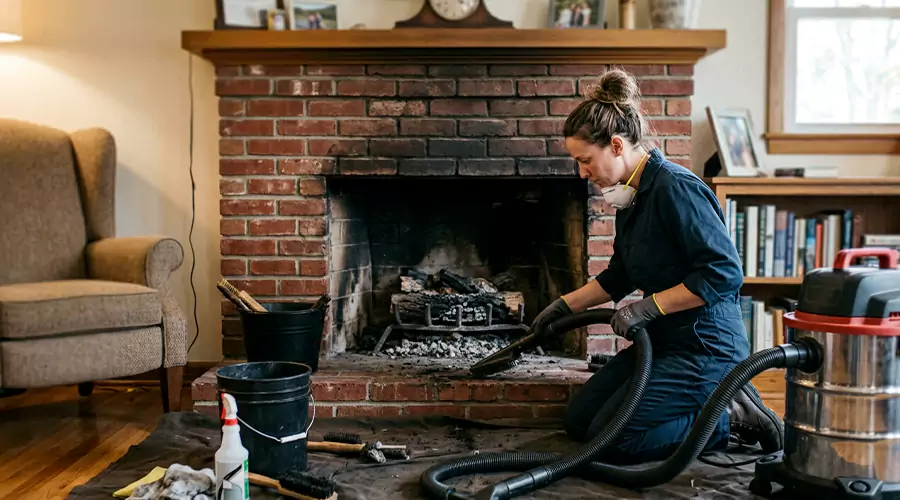
Loose soot should only be cleaned after the fireplace is completely cold. A fireplace soot cleaner may help remove dark staining when the product is suitable for the masonry surface. When you remove soot from fireplace brick, test the cleaning method on a small hidden area first. Do not assume cleaning the firebox also cleans the chimney. Deposits farther up the flue require proper chimney sweeping. CSIA recommends mechanical sweeping because brushing physically removes loose soot and creosote from the venting system.
Professional evaluation is appropriate when soot keeps returning or when smoke enters the room.
Arrange an inspection if:
CSIA recommends annual chimney inspections and states that masonry fireplaces should generally be swept once sooty buildup reaches about 1/8 inch, or sooner when glazed creosote is present.
Prevention starts with fuel quality and airflow. Burn only appropriate dry firewood. Do not burn trash, packaging, painted lumber, or similar materials in the fireplace. Watch for changes in smoke behavior each time the fireplace is used. Regular inspection can also identify blocked flues, creosote deposits, damaged components, and animal debris before they interfere with chimney performance. Annual inspection is recommended for wood-burning systems.
Soot from fireplace use is mainly caused by incomplete combustion. Wet wood, smoldering fires, restricted airflow, poor chimney draft, cold flues, and indoor pressure problems can all increase black carbon deposits.
Start by using dry wood and maintaining good airflow. If soot begins spreading beyond the firebox or smoke enters the room, stop using the fireplace until the chimney and venting system have been checked.
No. Smoke can injure or kill birds and may create additional hazards when nesting material is blocking the chimney.
It depends on whether the bird is trapped or nesting. Nesting birds may remain until eggs hatch and young birds are able to leave.
Usually, but confirm that it is genuinely inactive first. Wildlife rules vary, and active nests may be legally protected.
Keep the bird in one room, reduce other light sources, and open one clear exterior window or door so it can find its way outside.
Yes. Nests and accumulated debris can restrict airflow and interfere with safe chimney venting.
Once the nest is inactive and removed, install a correctly sized chimney cap or approved bird guard and inspect it periodically for damage.
Understand what causes soot from a fireplace, including incomplete combustion, poor ventilation, wet firewood, restricted airflow, and chimney draft problems.
